|
|
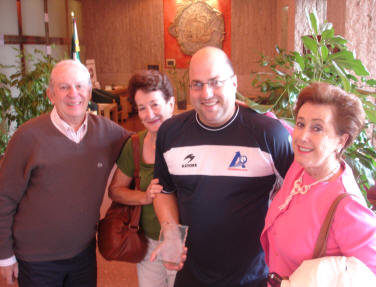
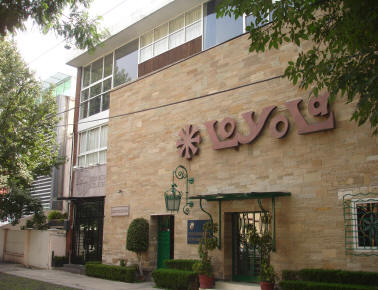
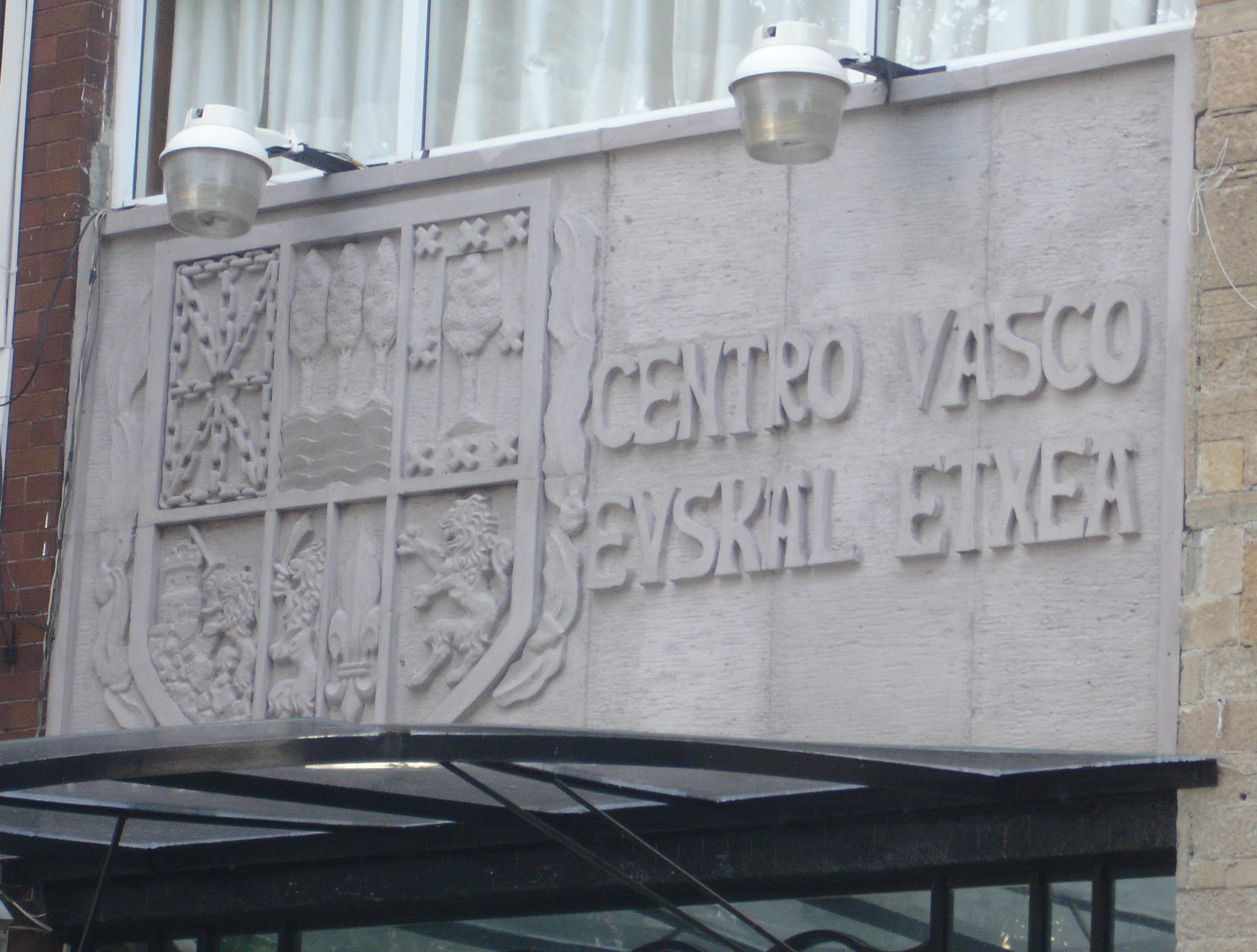
In a gesture of solidarity and to express congratulations to our Basque friends of Mexico, last month a NABO delegation went south for a weekend to join in the commemoration of the 100th anniversary of the founding of the Euskal Etxea of Mexico City.
Founding of Basque Clubs
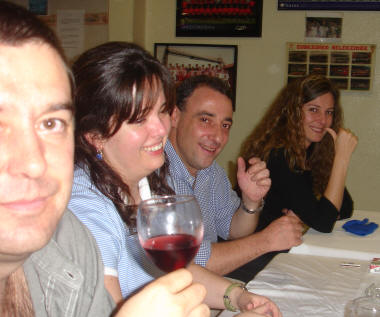
Our NABO delegation was hosted in fine fashion, as we went right into a dinner reception where we meet with most of the club's board of directors. The festivities took right off, and after the meal we were singing and dancing. It did help that we had met some folks earlier. Back in October of 2006, NABO hosted a summit of North American Basque communities and we invited Mexico and Canada to send along delegates. Canada's two Basque clubs (Montreal & Vancouver) sent delegates, and from Mexico City came Eduardo Ormaechea and his wife Begona to join us for a weekend in Gardnerville/Reno. The gathering was informal, being primarily an opportunity for our communities to meet each other. Having taken the name "North American" years ago, the thinking was that it was time to reach out to our Canadian and Mexican Basque friends.
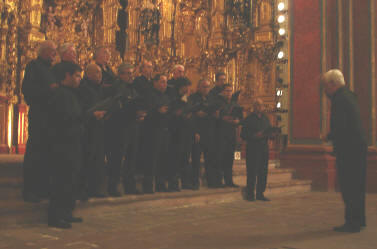
During that weekend in Nevada it was decided that we should reciprocate and make a visit to Mexico and Canada. Since Mexico City was celebrating its 100th anniversary the following year, this decided the matter and soon plans were made to travel south. The original trip was slated for March 2007 but it had to postponed, but fortunately we were able to go in September just in time as their anniversary was culminating. To mark a century as a Basque community, the club held several events and this time around they hosted the "Gaztelupe" men's choir from Donostia, Gipuzkoa One night they performed for the membership at the club then the next day at a former Jesuit church just outside Mexico City. We were along for the ride, taking in these festivities.
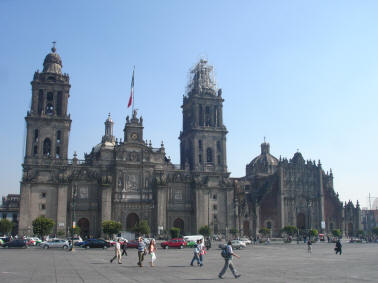
Three days is not near enough to take in one of the world's largest cities. Our gracious hosts arranged a couple of tours for us including one of the impressive Anthropological Museum, and then Mary and myself took a ride on the "Touribus" (an English double-decker bus with the top open) our last morning there. It is a city of contrasts: of old and new structures, of pre-Columbian and Spanish cultures, of rich and poor, of traditional and avant-garde. Its historic center is marked by the Metropolitan Cathedral that was built soon after the Spanish conquest of the Aztecs. Just a short distance away were the ruins of the large pyramid temple that served as the spiritual center of the former Aztec empire. When we were there the country was in the midst of their patriotic celebration: in the U.S. its the 4th of July but in Mexico they celebrate the whole month; 2010 will be their bi-centennial of Independence.
While separated by distance and some varied traditions, we nevertheless felt very much at home there in the Basque community. I remember feeling the same years ago when we traveled to Mar del Plata, Argentina. There's something comforting about stepping into an "Euskal Etxea" which probably has to do with its name which means "the Basque's house." Those who envisioned and built these facilities did it not just for themselves, but for all Basques. We hope to follow-up on this joyous weekend with more contacts in the time ahead. Next up, some of us have to make a trip up north to visit our Basque friends in Canada and so the Basque wheel will keep turning. To our gracious hosts in Mexico City we say "eskerrik asko--muchas gracias!"
|


 Mexico
City is one of the largest cities in the world today with somewhere over
25 million people living in the larger metropolitan area. And of
course, sprinkled in that population you'll always find a handful of
Basques who got together to create a Basque club. That's what
happened one hundred years ago, and this year (2007) the Euskal Etxea of
Mexico City has been celebrating this accomplishment with several events
meant to commemorate the centennial anniversary. Joining in one of these
commemorative events was a NABO delegation consisting of Mary Gaztambide (NABO President), Xabier
Berrueta (North American "asesor" for the Basque Disapora) and John
Ysursa (NABO Facilitator).
It was a chance to meet and greet our Basque friends from Mexico, and to
present their members with a commemorative plaque from their Basque
friends to the north.
Mexico
City is one of the largest cities in the world today with somewhere over
25 million people living in the larger metropolitan area. And of
course, sprinkled in that population you'll always find a handful of
Basques who got together to create a Basque club. That's what
happened one hundred years ago, and this year (2007) the Euskal Etxea of
Mexico City has been celebrating this accomplishment with several events
meant to commemorate the centennial anniversary. Joining in one of these
commemorative events was a NABO delegation consisting of Mary Gaztambide (NABO President), Xabier
Berrueta (North American "asesor" for the Basque Disapora) and John
Ysursa (NABO Facilitator).
It was a chance to meet and greet our Basque friends from Mexico, and to
present their members with a commemorative plaque from their Basque
friends to the north.