

The Gernika-Lumo Town Council has launched an international campaign to collect signatures to ask the Spanish Ministry of Culture to transport Picasso's most famous painting for display in Gernika. See www.guernicagernikara.net
Related links: Wikipedia.org Euskalkultura.com Guernicagernikara.net April 26, 1937
The Gernika-Lumo Town
Council has launched an international
campaign to collect signatures to ask the
Spanish Ministry of Culture to transport
Picasso's most famous painting for display
in Gernika.
For this, the council has developed
www.guernicagernikara.net website, which
encourages citizens to support the
initiative to sign the petition. The goal is
to reach half a million signatures. Also two separate
channels have been created on
 Facebook and
 Twitter, to support the
campaign.
Twitter, to support the
campaign.
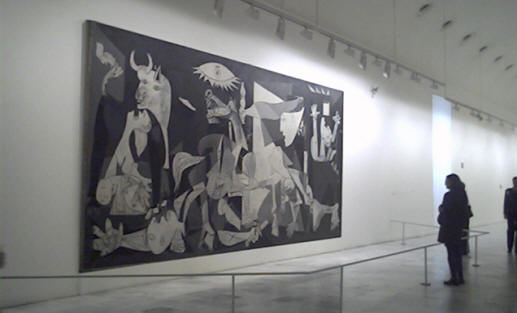
April 26, 2011 will mark 74 years since the
bombing of Gernika in the midst of the
Spanish Civil War. The
'Guernica' painting is on display today at the Museo
Reina Sofia in Madrid, and though it has
traveled to other museums in the world,
museum directors say they cannot transport
it now.

Pablo Picasso's painting reveals the horrors of the Spanish Civil War. The Malaga-born artist painted this picture to denounce the aereal bombing and the slaughter perpetrated in Gernika in 1937 by Nazi Germany's aviation. Picasso uses symbols and images of people who are broken and suffering, with most of the faces looking up to the sky where destruction has rained down upon them.
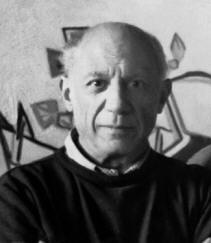 |
Pablo Picasso (1881-1973).
Arguably Picasso’s most
famous work is his depiction
of the German bombing of
Gernika (Guernica in
Spanish) during the Spanish
Civil War--Guernica. This
large canvas embodies for
many the inhumanity,
brutality and hopelessness
of war. Asked to explain its
symbolism, Picasso said, “It
isn’t up to the painter to
define the symbols.
Otherwise it would be better
if he wrote them out in so
many words! The public who
look at the picture must
interpret the symbols as
they understand them.”
Guernica hung in New York’s Museum of Modern Art for many years. In 1981 Guernica was returned to Spain and exhibited at the Casón del Buen Retiro. In 1992 the painting hung in Madrid’s Reina Sofía Museum when it opened. |

The
city of Gernika is also the site of one of
the sacred Basque oaks:
Gernikako arbola

